

How to Ship an Engine: The Ultimate Freight Prep & Cost Guide
Shipping a car engine, motorcycle motor, or heavy-duty diesel engine block requires strict preparation to prevent terminal rejections, accessorial surcharges, or fluid damage claims.
Because engines are dense, heavy, and potentially hazardous, commercial carrier networks maintain rigid guidelines for structural palletization.
To determine transit costs immediately, input your total freight weight, dimensions, and zip codes into our live Freight Shipping Calculator below.
QUOTE CALCULATOR GOES HERE
How to Prepare an Engine for Shipping
Before an automotive engine touches a carrier’s truck bed, it must be completely decommissioned and rendered dry. Common LTL (Less-Than-Truckload) carriers will instantly reject any freight showing signs of active fluid leakage.
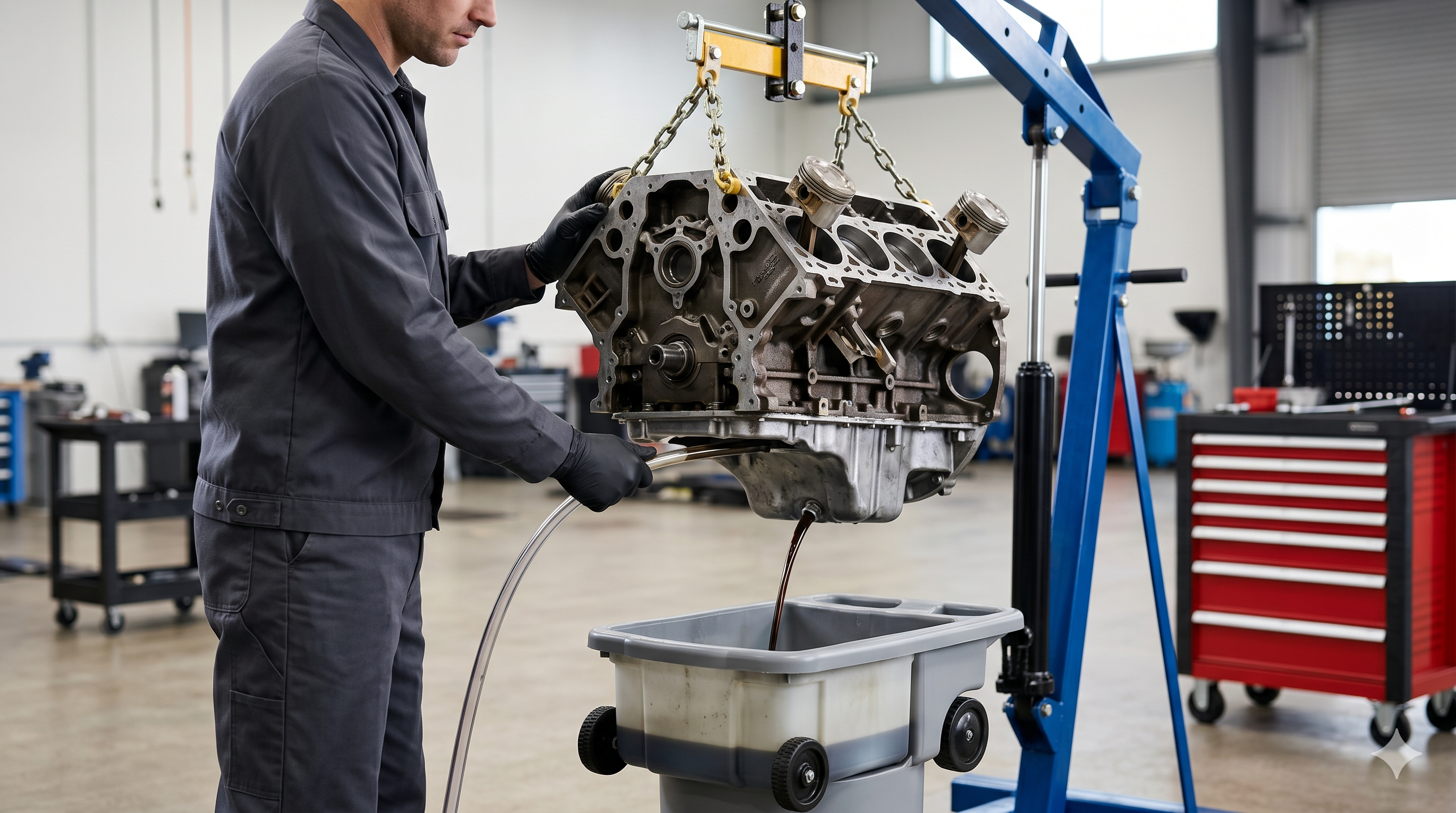
Complete Fluid Drainage: Drain all engine oil, transmission fluid, and coolant. Manipulate the block dynamically using an engine hoist, tilting it at multiple angles to evacuate residual fluids trapped in the torque converter, oil pan corners, and oil filter housing. Resecure all fluid drain plugs and tighten all orifices.
Degrease and Dry Outer Surfaces: Spray down the entire block with an industrial degreaser. Wipe away all exterior oil film, grease accumulations, and moisture. The engine block must be completely clean to the touch.
How to Ship an Engine on a Pallet
The absolute best way to ship an engine safely while securing the lowest freight class is to secure it to a heavy-duty wooden pallet. A bare, unpalletized engine is highly prone to tipping and will incur massive handling surcharges.
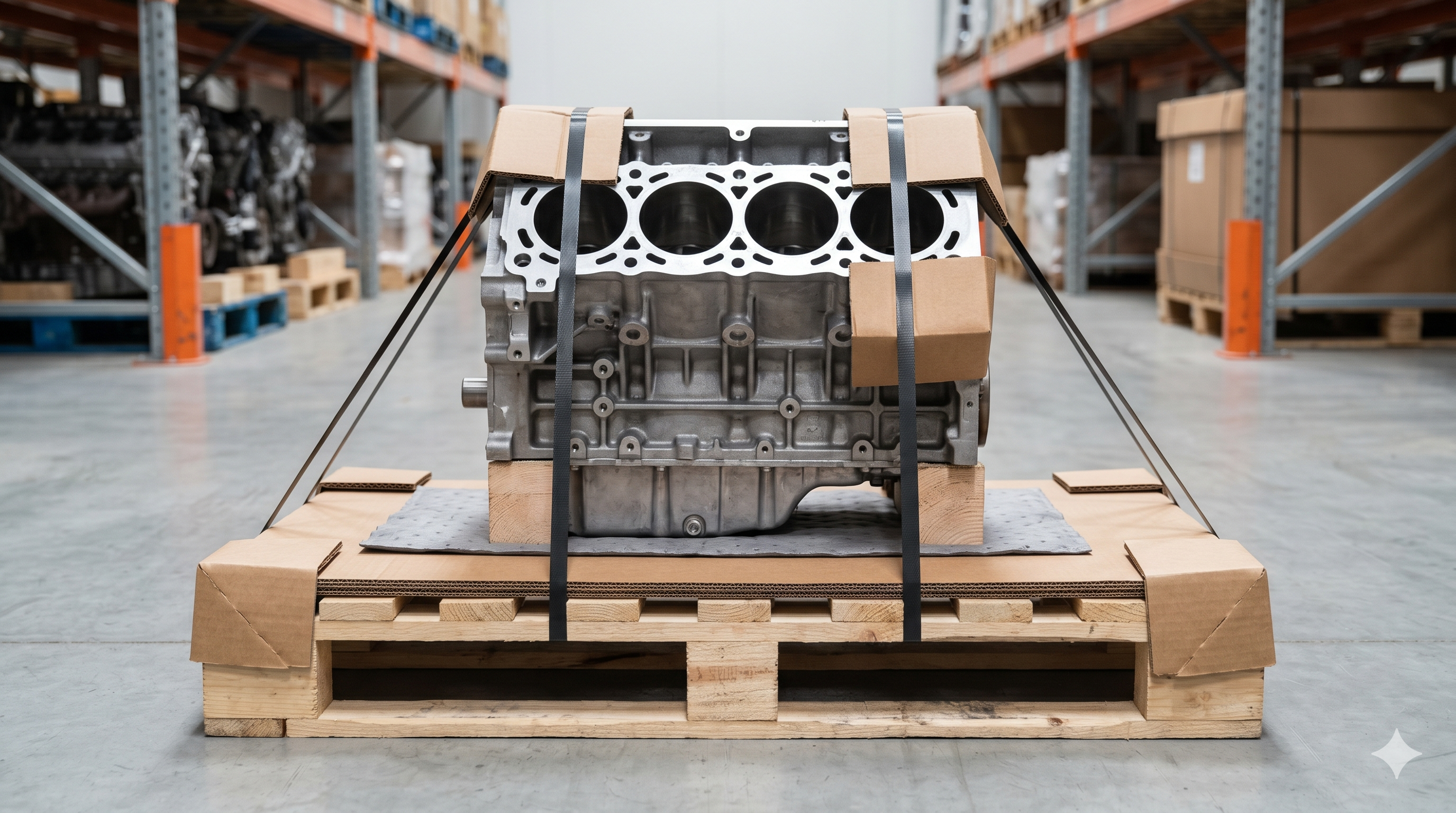
Reinforce the Pallet Deck: Place a heavy-duty sheet of 3/4-inch plywood across the top slats of a sturdy wood pallet if the engine's weight risks bowing individual wooden slats. Lay down thick cardboard or an oil-absorbent pad directly over the wood deck.
Center the Weight Distribution: Position the engine block perfectly in the center of the pallet footprint. Ensure there is a minimum of 4 inches of clearance between the outermost edge of the engine components and the edge of the pallet to protect it from perimeter collisions. If you are using a non-standard or custom-built base, check our comprehensive
standard pallet sizes chart to ensure your platform's exact length and width metrics match standard carrier dock configurations.
Industrial Strapping Strategy: Use heavy-duty steel strapping or high-tensile industrial plastic binding. Run a minimum of four straps—two passing front-to-back and two passing side-to-side—threading them natively under the top deck boards of the pallet. Tighten the straps to eliminate any shifting or shearing forces during transit.
The Protective Cocoon: Block and brace any protruding components (like the oil pan) with wooden blocks nailed directly into the pallet deck. Wrap the sides and top of the engine securely with cardboard sheets, then finish the entire unit with multiple tight layers of industrial shrink wrap to protect against road grime and moisture.
Engine Shipping Cost Calculator (2026 Benchmarks)
How much does it cost to ship an engine? Because engines maintain high density (occupying minimal trailer space relative to weight), they carry low damage claim rates, keeping pricing highly competitive. Final shipping costs depend heavily on distance, total weight, and dock-to-dock vs. residential access variables.
Below are standard industry pricing benchmarks for common engine transport lanes:
| Engine Weight & Type | Origin to Destination Lane | Standard Dynamic Load | Estimated Freight Cost |
| 250 lbs (4-Cylinder Aluminum Block) | Maryland to Washington State | Palletized / Shrunk-Wrapped | $200 – $275 |
| 500 lbs (Iron Block V8 Engine) | Texas to Ohio | Crated / Fully Palletized | $250 – $340 |
| 1,000 lbs (Heavy-Duty Diesel Block) | California to Iowa | Heavy Reinforced Skid | $350 – $480 |
TRUST SECTION GOES HERE
The Cheapest Way to Ship an Engine
The most affordable method to move a motor is utilizing economy LTL freight services from a commercial dock-to-dock terminal.
Choosing residential delivery locations or requiring a carrier liftgate truck to unload the pallet will add fixed accessorial fees to your baseline rate quote.
To see which major national freight lines offer the most competitive rates and robust infrastructure for heavy machinery, you can review our breakdown of the
What Freight Class Should You Use for Shipping an Engine?
National Motor Freight Classification (NMFC) numbers are determined by cargo density, ease of handling, and specific packaging characteristics established by the
When filling out your shipping Bill of Lading (BOL), explicitly write "Engine" or "Motor" and include the exact relevant NMFC codes:
NMFC #120790.02 (Class 70): Applies to motorcycle engines or high-density motors wrapped securely in a rigid wooden crate with a density exceeding 18 lbs per cubic foot.
NMFC #120790.01 (Class 85): Standard automotive engines, palletized, strapped, and shrink-wrapped, maintaining a standard density around 9 lbs per cubic foot.
NMFC #18260.11 (Class 60): Steel diesel timing gears, individual engine blocks, or heavy iron engine components exhibiting high density over 31 lbs per cubic foot.
Engine Shipping FAQs
How long does it take to ship a car engine across the country?
Standard regional engine deliveries typically arrive within 1 to 3 business days. Cross-country transits (such as East Coast to West Coast lanes) generally require 4 to 7 business days, depending on carrier linehaul routing schedules and terminal congestion.
Can I ship an engine block if it still has parts attached?
Yes, but any remaining accessories like water pumps, alternator brackets, or exhaust manifolds must not protrude past the perimeter of your wooden pallet. Securely wrap or pull separate external parts to ensure everything stays protected within the cardboard cushioning perimeter.
If your shipment involves cross-border vehicle transport or multimodal global logistics, it is highly recommended to coordinate with top freight forwarders in the USA to ensure customs clearance and compliance with international documentation requirements.
What happens if my palletized engine leaks fluid during transit?
If a carrier notes fluids leaking from your engine pallet inside a terminal hub or transit trailer, they will immediately stop your shipment and place it in a containment zone. The shipper is held fully liable for environmental clean-up costs and hazardous material handling fees under federal
Entrust Your Engine Shipping to FreightRun Professionals
Managing commercial carrier paperwork can be highly complex for first-time shippers. If you are unsure how to look up an NMFC code, classify an engine block, or select the correct accessorial options for an upcoming delivery, our freight specialists are standing by.
Snap a clear photo of your prepped engine, upload it to our team, and a dedicated logistics agent will audit your dimensions to secure a certified, risk-free freight shipping rate.