

Freight Linear Feet Calculator
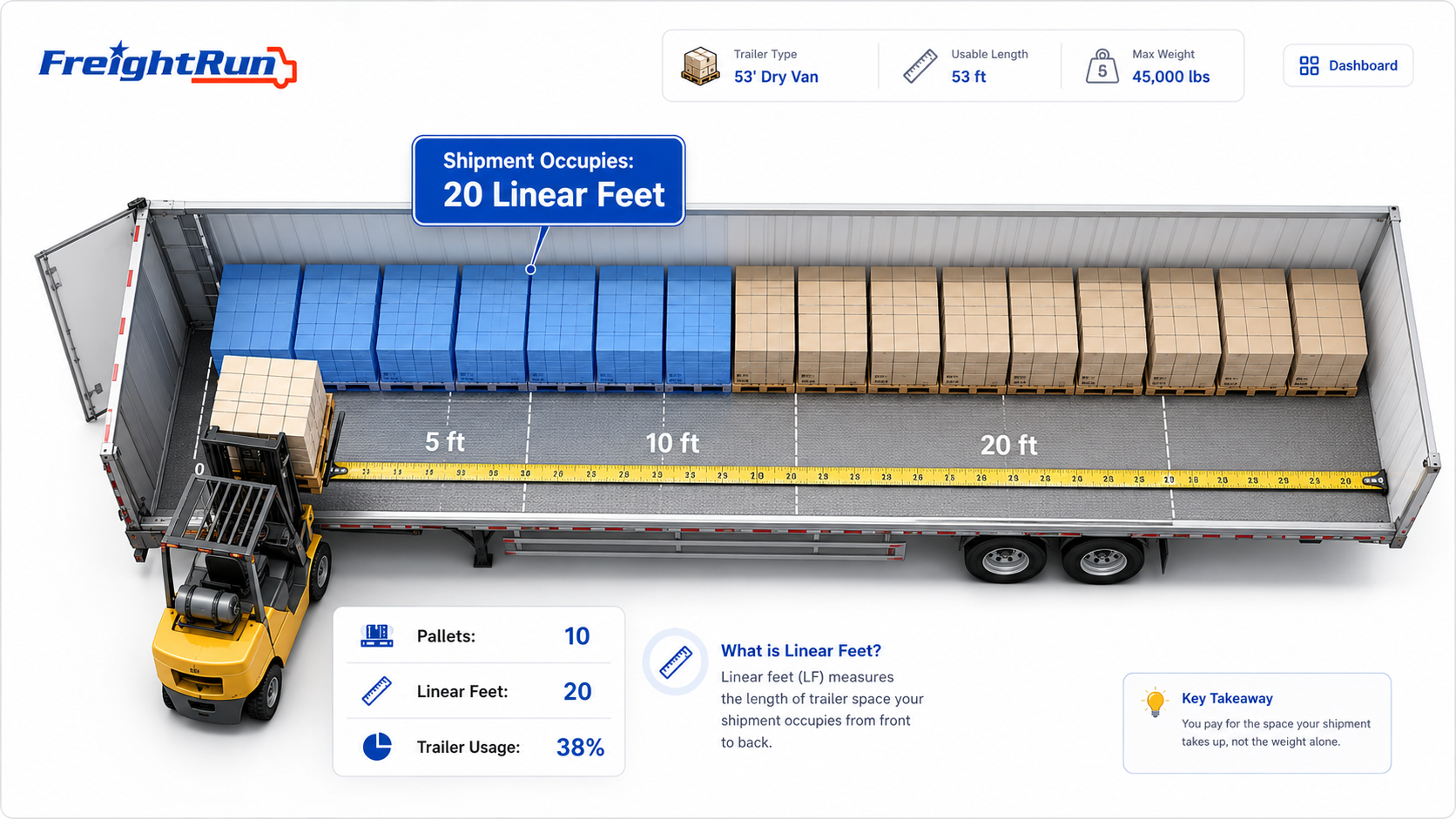
When shipping LTL (Less Than Truckload) freight, trailer space is as important as weight. Carriers often use linear feet - the measurement of length along the trailer - to estimate how much space pallets will take up, especially for large or non-stackable shipments.
FreightRun's Freight Linear Feet Calculator lets shippers quickly estimate trailer space, avoid extra fees, and prepare more accurate freight quotes for LTL or partial truckload.
What Is a Freight Linear Feet Calculator?
A freight linear-feet calculator estimates the trailer space used in LTL or truckload shipping. Shippers use it to calculate pallet space, improve quotes, and prevent unexpected carrier charges.
Enter your pallet quantity and dimensions to estimate trailer space usage. This calculator works best when all pallets have the same dimensions. For mixed, oversized, or irregular freight, contact FreightRun for a custom quote.
By using a linear-foot freight calculator, both the shipper and the carrier share an understanding of the space a shipment will require before it arrives for loading. This helps provide accurate quotes and eliminate wasted space on trailers caused by misquoted shipping dimensions.
Below, we'll explain how to calculate linear feet for freight and how freight carriers and shippers use it in different situations, such as LTL or FTL trucking. You'll also find a linear feet freight calculator on this page to help you make faster calculations.
Not sure how much trailer space your pallets will take up? Review our standard pallet sizes guide to check common pallet dimensions before using the linear feet calculator.
Why Shippers Choose FreightRun
- Compare rates from 50+ carriers
- Shipment management tools in one platform
- Customer shipment reviews
- Freight specialists available for support
- BBB-rated business
If you require assistance with mixed pallets or oversized freight, our team is available to help. Contact FreightRun's freight specialists for accurate trailer space estimates and LTL carrier rate comparisons.
Get a Freight QuoteWhy Linear Feet Matter in LTL Shipping
In LTL shipping, multiple customers share a single trailer. Because carriers need to maximize trailer capacity, they often calculate freight charges based on the number of linear feet a shipment occupies in the trailer.
Accurate linear foot calculations help:
- Reduce billing surprises
- Avoid reclassification fees
- Improve freight quote accuracy
- Optimize trailer space
- Determine when PTL or FTL shipping may make more sense
Many carriers also apply the linear foot rule once shipments exceed a certain amount of trailer space.
What Is a Linear Foot in Freight Shipping?
A linear foot is 12 inches measured along the trailer floor in a straight line.
In freight shipping, carriers typically measure the length of your shipment inside the trailer rather than the total square footage or cubic volume. For pallets, length is the primary factor in linear-foot calculations.
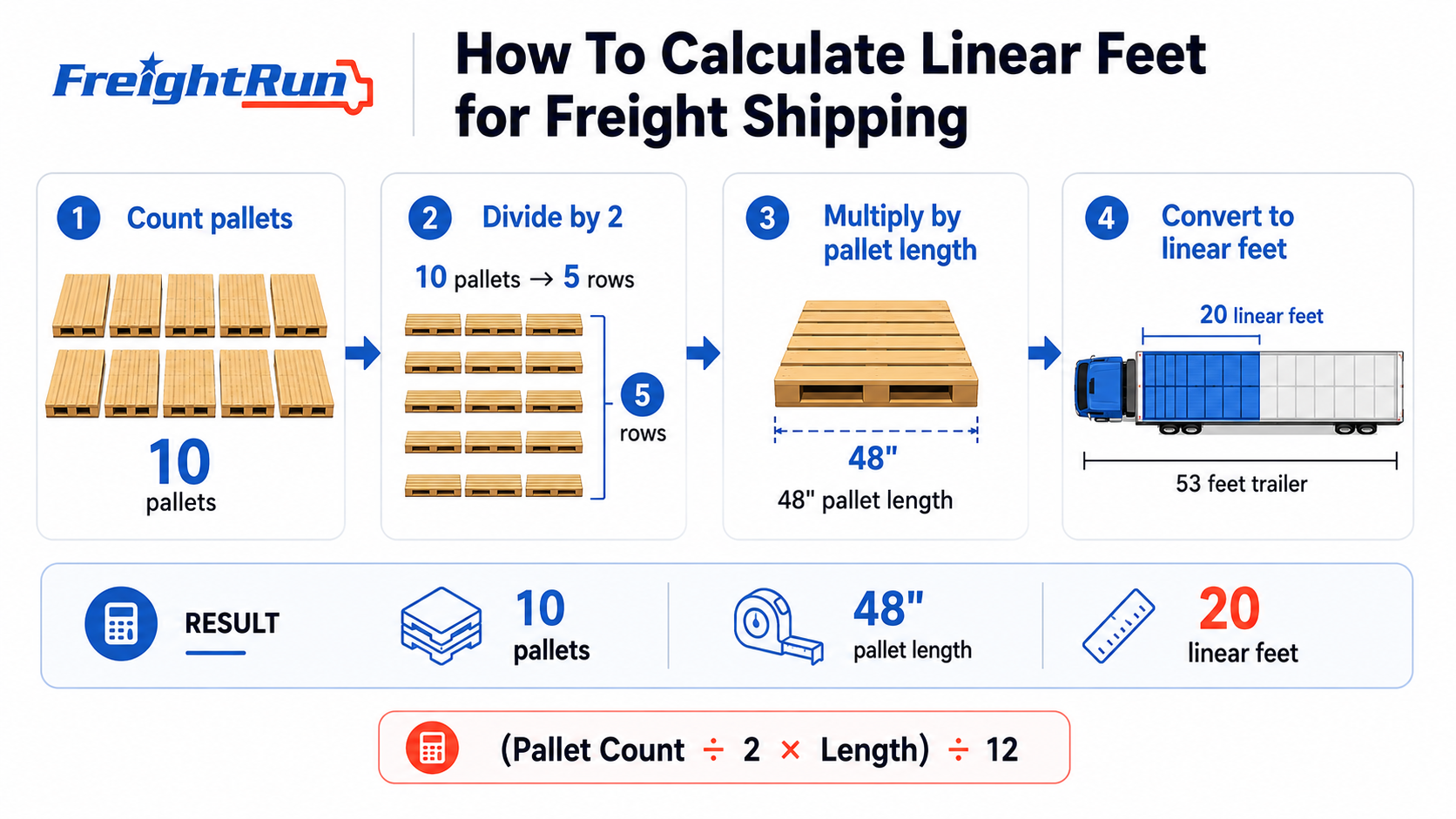
How to Calculate Linear Feet for Freight Shipping
Linear-foot calculations are straightforward for standard pallet shipments.
Step-by-Step Linear Foot Calculation
Step 1 — Count Total Pallets
Determine the number of pallets in the shipment. Example: 10 pallets.
Step 2 — Divide Pallets by 2
10 ÷ 2 = 5. This accounts for how pallets fit side by side in a standard trailer.
Step 3 — Multiply by Pallet Length: In North America, the most common industrial configuration utilizes a standard 48" × 40" footprint.
Step 4 — Convert Inches to Linear Feet
240 ÷ 12 = 20 linear feet.
Quick Reference
| Pallets | Pallet Size | Linear Feet |
| 2 | 48" × 40" | 4 ft |
| 4 | 48" × 40" | 8 ft |
| 6 | 48" × 40" | 12 ft |
| 8 | 48" × 40" | 16 ft |
| 10 | 48" × 40" | 20 ft |
How Many Linear Feet Is One Standard Pallet?
A standard 48" × 40" pallet is approximately 1.67 linear feet. However, actual trailer usage depends on stackability, pallet orientation, trailer width, freight dimensions, and carrier loading practices.
Single pallets are rarely billed solely on linear-foot pricing. Most carriers evaluate the entire shipment footprint.
Linear Feet vs Square Feet vs Cubic Feet
One common shipping mistake is confusing linear feet (trailer length used) with square footage (surface area) or cubic volume (total space).
| Measure | What It Tracks | Typically Used For |
| Linear Feet | Trailer length usage | LTL trailer space |
| Square Feet | Surface area | Flooring, decking |
| Cubic Feet | Total volume | Freight density |
This is why a square-feet-to-linear-feet calculator is not always accurate for freight shipping. Freight carriers care about how shipments physically fit inside trailers.
Standard Trailer Dimensions and Capacity
Most dry van trailers used in LTL freight shipping are approximately:
- 53 feet long
- 102 inches wide
- 110 inches high
Due to limited width, carriers carefully plan how freight fits within the trailer's footprint. Shipments occupying large amounts of trailer floor space may trigger:
- Linear foot pricing
- Volume LTL pricing
- Partial truckload recommendations
- Reclassification charges
What Is the Linear Foot Rule?
The linear foot rule is a common LTL shipping pricing method. Many carriers apply this rule when freight occupies:
- 10 or more linear feet of trailer space
- Large non-stackable shipments
- Oversized pallet configurations
Under this rule, carriers may charge shipments at 1,000 pounds per linear foot, even if the actual shipment weight is lower.
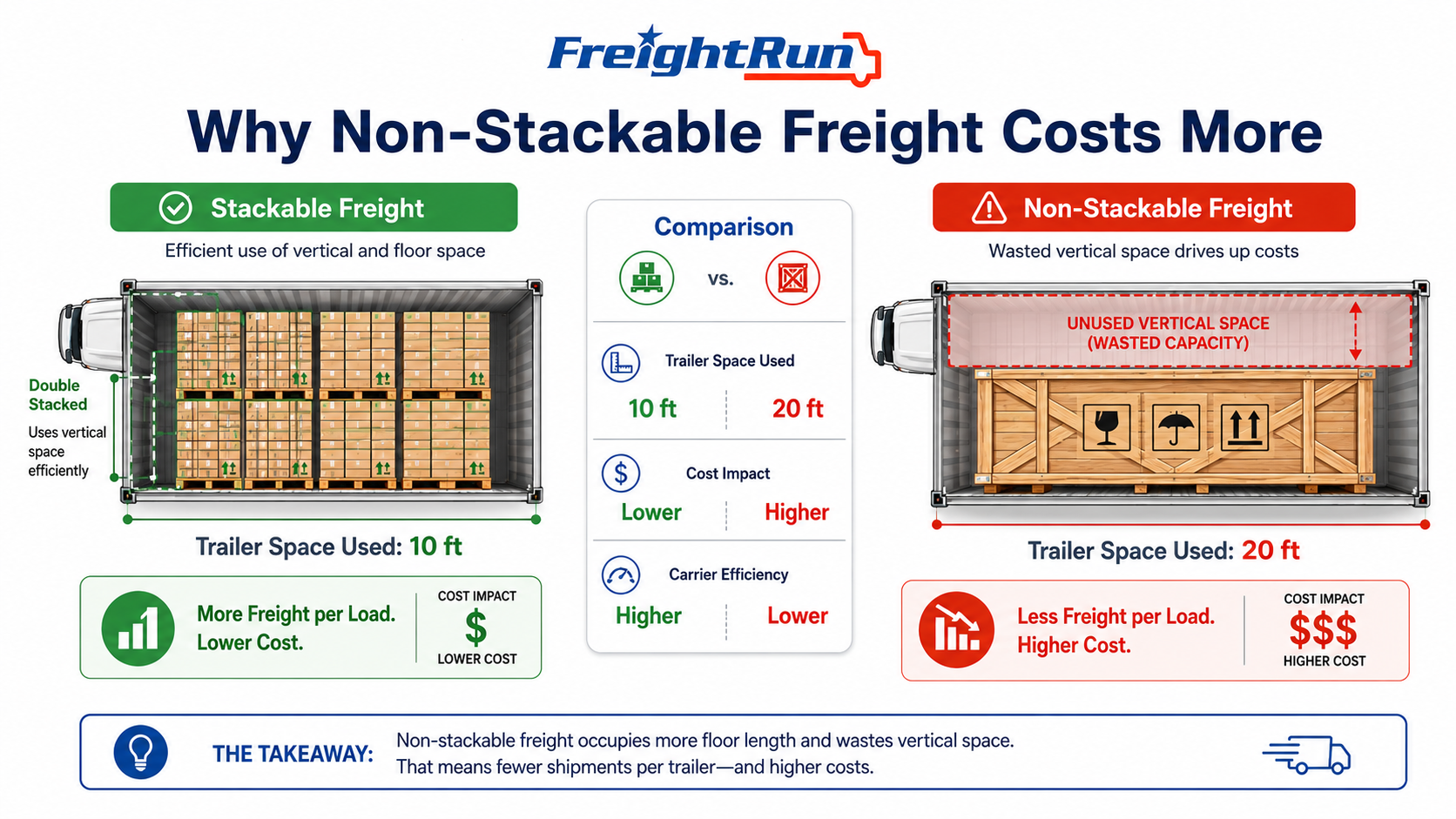
Why Non-Stackable Freight Costs More
Non-stackable freight uses more trailer space. Examples include machinery, fragile freight, oversized crates, retail displays, and sensitive electronics. Freight that cannot be stacked requires more trailer capacity per unit shipped.
Stackable vs Non-Stackable at a Glance
| Freight Type | Trailer Space Used | Relative Cost |
| Stackable Pallets | Lower | Lower |
| Non-Stackable Freight | Higher | Higher |
LTL vs FTL: When Linear Feet Matter Most
| Shipping Type | Linear Feet Apply? | Pricing Impact |
| LTL Shipping | Yes | Common |
| Partial Truckload | Sometimes | Possible |
| Full Truckload | No | Less common |
Linear foot calculations matter most in LTL freight because multiple shipments share the same trailer. For larger shipments, FreightRun may recommend volume LTL, partial truckload, or full truckload shipping, depending on trailer utilization and cost efficiency.
Common Freight Shipping Scenarios
Non-Stackable Machinery
Industrial equipment often requires linear-foot pricing because pallets cannot be safely stacked.
Retail Display Freight
Retail fixtures and displays may take up a lot of trailer space yet be lightweight, making linear foot pricing especially relevant.
Oversized Crates
Large crates may exceed the standard pallet footprint and require manual space planning with a carrier.
Mixed Pallet Freight
Shipments with various pallet sizes usually require custom calculations rather than standard formulas.
Common Linear Foot Calculation Mistakes
Using Width Instead of Length
Linear feet are based on pallet length along the trailer, not width.
Ignoring Stackability
Stackable pallets can significantly reduce trailer space usage and lower shipping costs.
Forgetting Freight Overhang
Freight overhanging pallet edges may occupy more trailer space than the pallet dimensions suggest.
Incorrect Pallet Dimensions
Even small measurement errors can affect freight quotes and trigger carrier billing adjustments.
Why Accurate Measurements Matter
Many LTL carriers verify pallet sizes during terminal handling. Incorrect freight measurements may result in:
- Reweigh fees
- Reclassification charges
- Billing adjustments
- Shipment delays
Accurate linear foot calculations avoid these issues and improve quote accuracy across the board.
When Freight Density Matters More Than Linear Feet
Some shipments are light but take up a lot of space on the trailer. Common examples include pillows, foam products, empty containers, and lightweight retail packaging. In these cases, carriers may also evaluate:
- Freight density
- Cubic feet
- Freight class
For better freight planning, use FreightRun's density calculator, cubic feet calculator, and freight class resources.
Freight Planning Tips for Shippers
1. Measure Pallets After Wrapping
Stretch wrap and overhang can change shipment dimensions. Always take final measurements after packaging is complete.
2. Verify Stackability Before Pickup
Declaring freight as stackable when it isn't can lead to carrier disputes and unexpected cost increases.
3. Compare LTL vs Partial Truckload
If your shipment exceeds 10-12 linear feet, a partial truckload may offer better pricing than standard LTL.
4. Use Accurate BOL Information
Incorrect dimensions on the Bill of Lading can lead to billing disputes, reclassification fees, and delivery delays.
Need Help Estimating Trailer Space?
FreightRun helps shippers compare LTL carrier rates, manage freight shipments, coordinate FTL shipping, estimate trailer usage, and avoid freight billing surprises. Use FreightRun's tools or contact our team for help with oversized, mixed, or non-stackable freight.
Compare Freight QuotesFrequently Asked Questions
How do you calculate linear feet for pallets?
Divide the total pallets by two, multiply by the pallet length in inches, then divide by 12. This estimates trailer space for LTL freight.
What is the linear foot rule in LTL shipping?
The linear foot rule is commonly applied when freight occupies 10 or more linear feet of trailer space. Many carriers charge based on trailer usage rather than just freight class.
How many linear feet is one pallet?
A standard 48" × 40" pallet equals approximately 1.67 linear feet.
What's the difference between linear feet and square feet?
Linear feet measure length in a straight line along the trailer. Square feet measure the total surface area. Freight carriers use linear feet to estimate trailer space occupancy.
Do stackable pallets reduce linear feet?
Yes. Stackable pallets reduce trailer space usage and may help you avoid linear-foot pricing adjustments from your carrier.
Can mixed pallets be used in a linear-feet calculator?
Basic linear foot calculators work best for pallets with identical dimensions. Mixed pallets usually require custom freight calculations.
When do carriers apply linear foot pricing?
Carriers commonly apply linear foot pricing to large LTL shipments, oversized freight, and non-stackable pallet configurations.
Is linear feet the same as cubic feet?
No. Linear feet measure trailer length usage, while cubic feet measure three-dimensional volume.
Related Freight Tools
- Freight Density Calculator
- Cubic Feet Calculator
- Freight Class Guide
- Standard Pallet Sizes Guide
- NMFC Lookup Tool
See Why Shippers Use FreightRun
Reliable service and consistent communication for pallet shipments. FreightRun helps businesses compare LTL carrier rates, coordinate freight shipments, and manage freight on a single platform.
Compare LTL Rates